Guard Locking Switches
The NHP Guard Locking Switches are designed for protecting hazardous areas where danger is not immediately removed after a stop request. They are ideal for use on applications such as high inertia rotating machines, fast rotating machines, and machines where high pressure is required to be released from pneumatic valves.
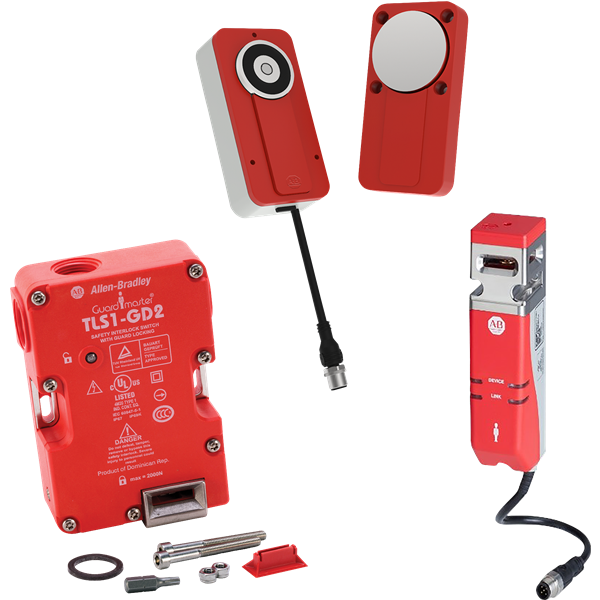
Product Range
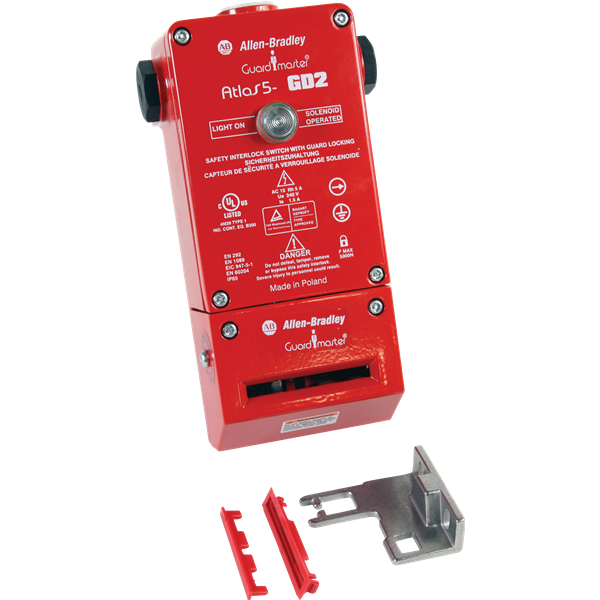
Allen-Bradley 440G Atlas 5 Guard Locking Switches
The Allen-Bradley 440G Atlas 5 Guard Locking Switches provide reliable and safe access control for machinery and equipment in industrial environments. Ideal solution for securing doors and gates, while ensuring the safety of personnel and equipment.
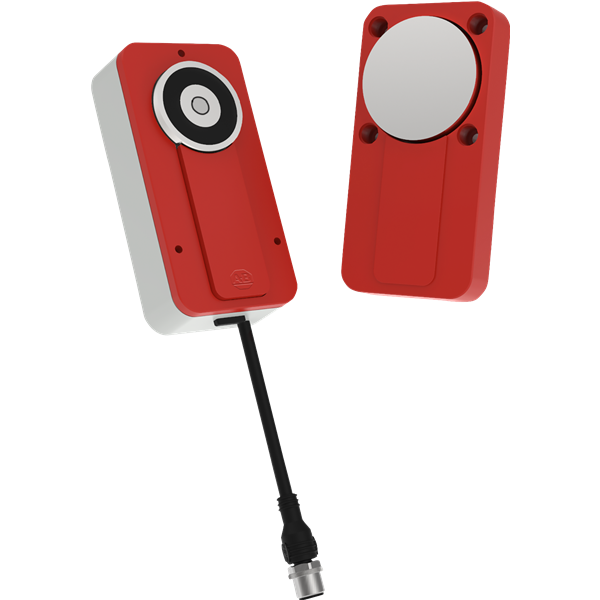
Allen-Bradley 440G-EZ Electromagentic Interlocking Switches
The Allen-Bradley Electromagnetic interlocking switch is designed to enhance machine safety and reliably protect working processes from unplanned downtime, improving productivity and increasing efficiency. Combining Power-to-Lock (PTL) magnetic locking function with a 500N holding force and 5mm tolerance to misalignment, the switches are an ideal solution for industrial facilities looking to improve safety measures without compromising on personnel protection.
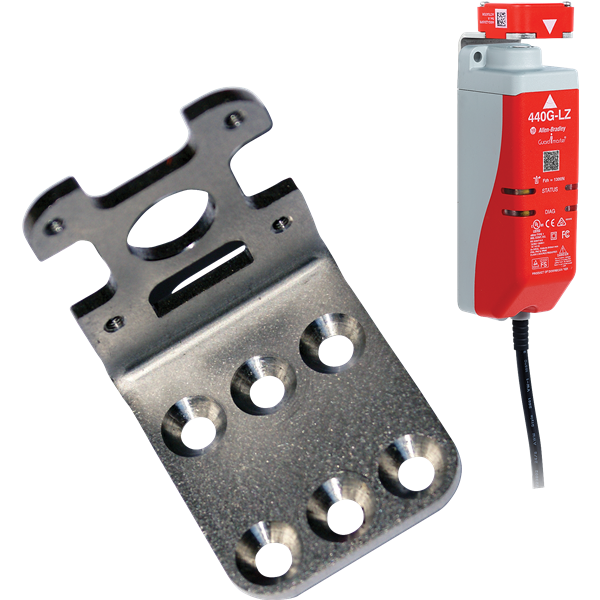
Allen-Bradley 440G-LZ Guard Locking Switches
The Allen-Bradley 440G-LZ guard-locking interlock switch is ideal for use on partial body access guards. Combines microprocessor technology with an RFID-coded actuator with a locking bolt drive mechanism, preventing the guard from opening and only extending when correct actuator is detected. Designed with a rated holding force of 1300N and two OSSD solid-state outputs, they are the ultimate in guard safety.
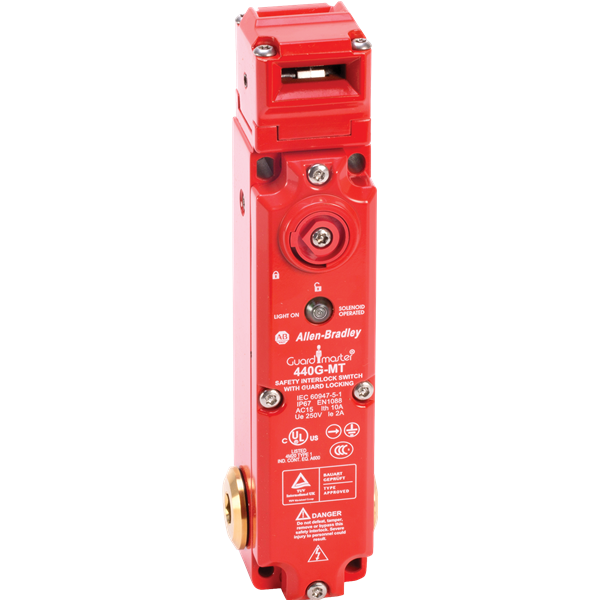
Allen-Bradley 440G-MT Guard Locking Solenoid Switches
The Allen-Bradley 440G-MT Solenoid Switch is an ideal solution for applications requiring safety locking mechanisms. Featuring a positive-mode, tongue-operated guard locking interlock switch that locks a machine guard closed until power is isolated while the guard is open and can only be re-opened when a signal is applied to the internal solenoid which releases the lock mechanism.


